Founding Edition · I
THE
JOURNEY OF SITAR
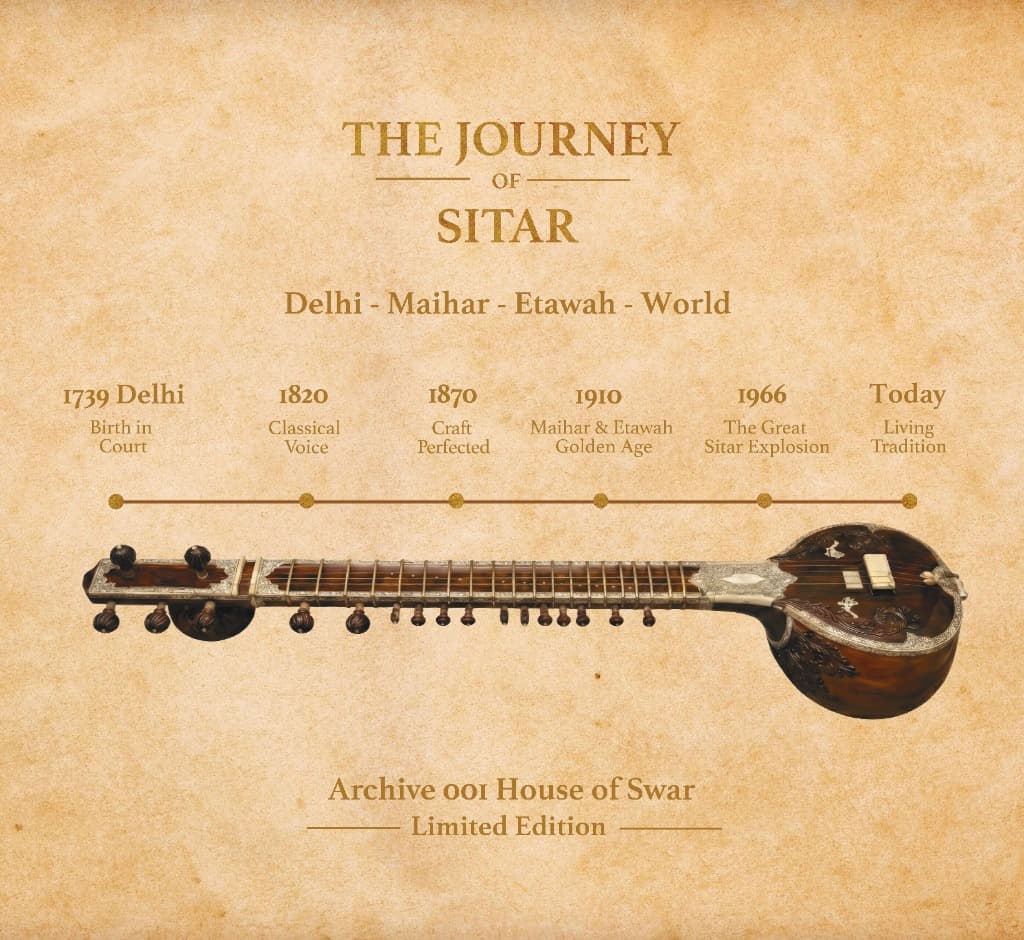
A documented cultural work tracing five centuries of the sitar's lineage across the Indian subcontinent. Presented in two archival formats.
The centrepiece of the work is a hand-crafted archival map - 24 by 18 inches - that traces the complete geographic and cultural journey of the sitar from its earliest traceable origins to the present.
The map documents the cities that shaped the instrument, the lineages that carried it, the courts that patronised its masters, and the routes along which musical knowledge travelled across the subcontinent.
Printed using pigment archival inks on 350gsm German Etching museum-grade paper using giclée process for long-term preservation.
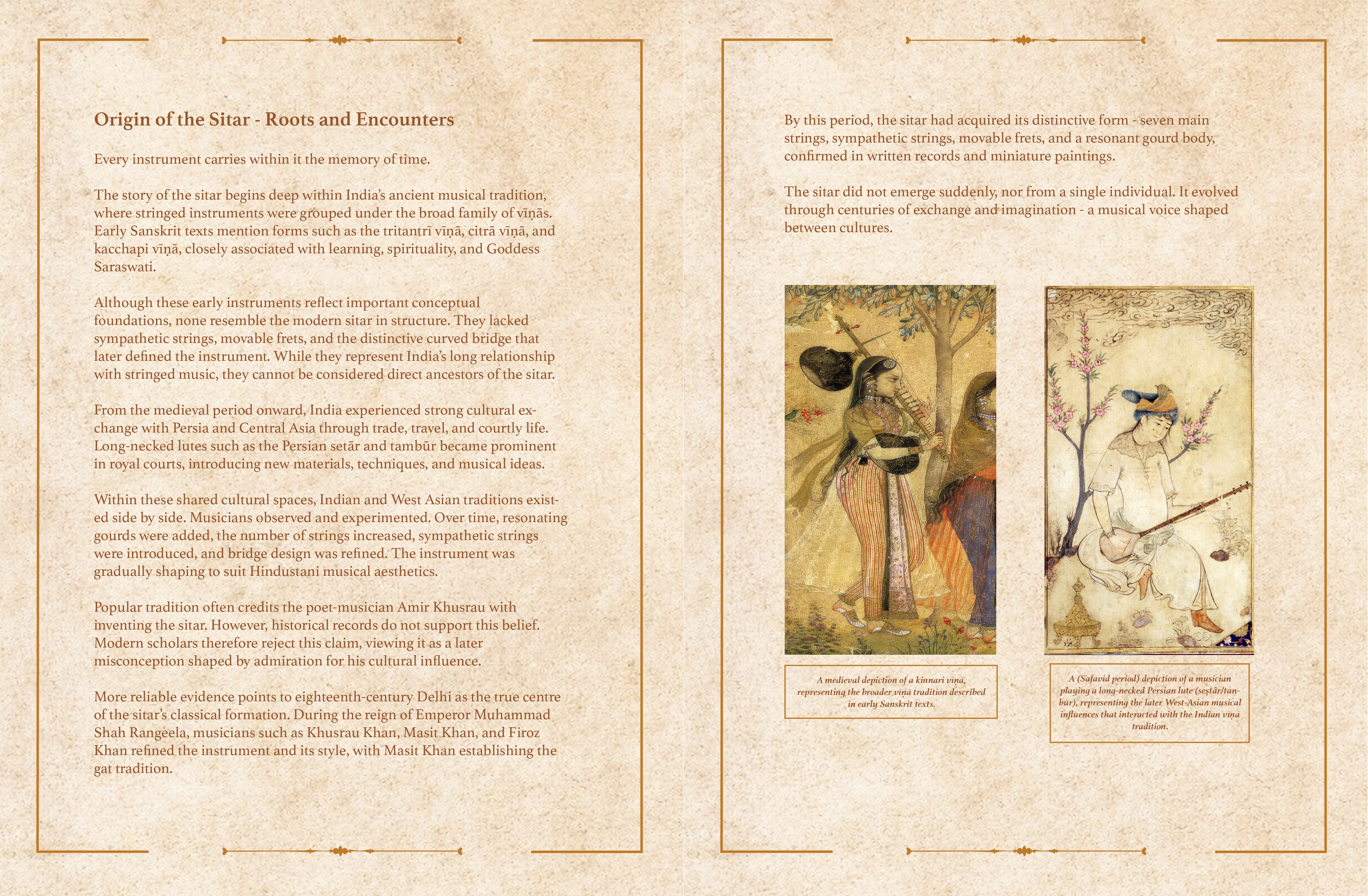
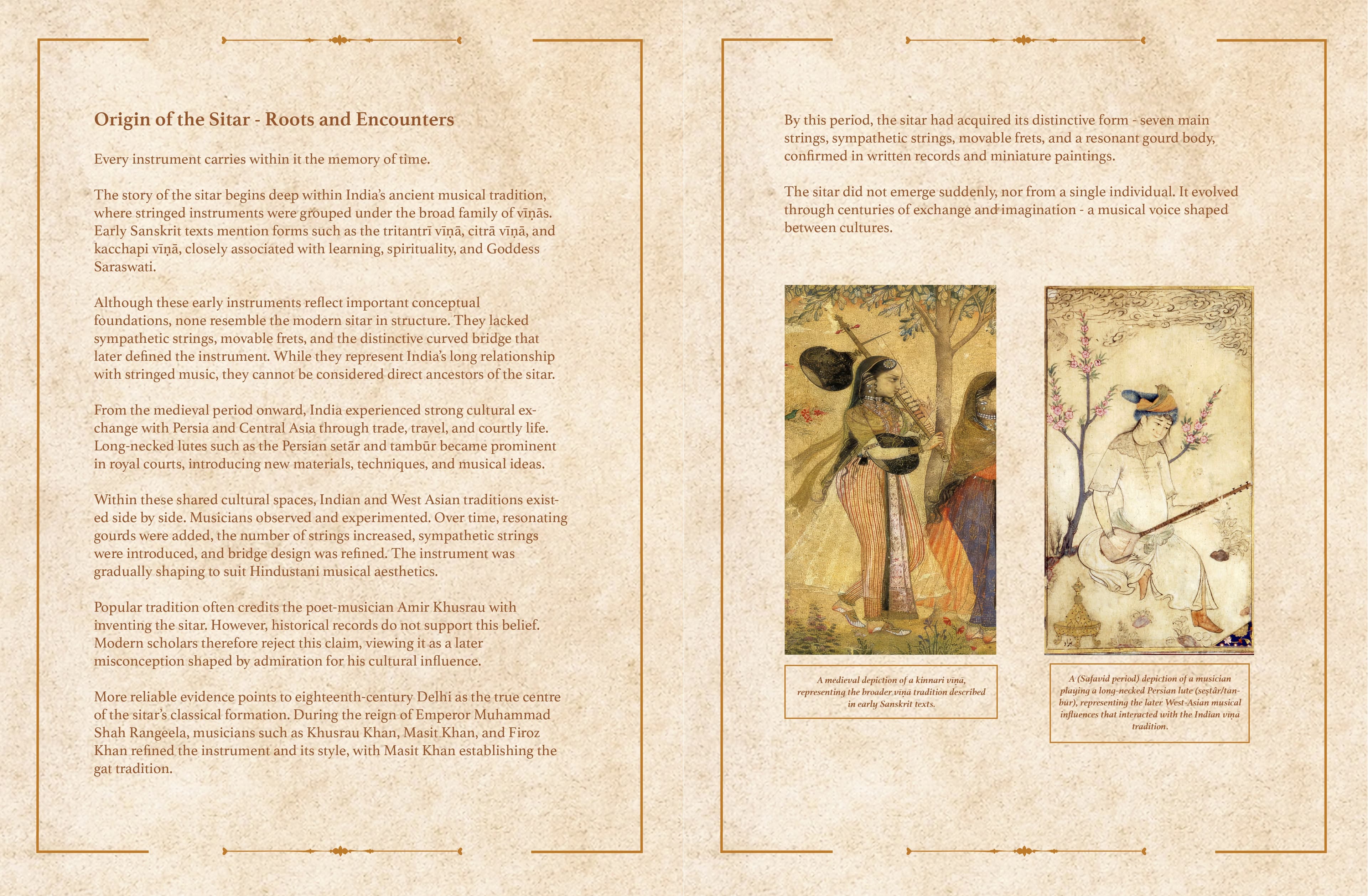
Accompanying the map is a bound manuscript that provides the complete textual documentation of the work - the research, the historical sources, the scholarly apparatus that grounds every element of the map in documented fact.
The manuscript explains what each city on the map represents. It traces the lineages of masters. It contextualises the political and social histories that shaped the sitar's development. It gives the map its meaning.
Together, the map and manuscript constitute a complete cultural record. The map is for display. The manuscript is for study. Neither is complete without the other.