Indian classical music has been performed for centuries. Yet its stories, lineages, and cultural geography exist nowhere in ownership form. House of Swar changes that.

A concert ends. The sound dissipates. A recording captures sound, but not the centuries of transmission that made that sound possible. The teacher who taught the teacher who taught the teacher - this chain disappears with each generation.
The cultural geography of how a raag travelled from Persia to Mughal courts to Delhi to Varanasi - this story has nowhere to live. It has never been documented as something one can hold.
Western classical music has always understood this. It has scores. It has manuscript facsimiles. It has cultural archival objects that collectors have preserved for centuries. These objects tell us not just what the music sounded like, but what the world looked like when it was made.
Indian classical music deserves the same. House of Swar exists to build this archive.
To own a cultural work is not a transaction. It is an act of custodianship. The collector becomes the keeper of a documented truth about our civilisation.
A preorder reservation here is not commerce. It is an agreement to hold - to be one of five people in the world who owns a documented, archival representation of one of India's most significant cultural forms.
This is how memory survives. Not in institutions alone. But in the hands of people who understood what was worth keeping.

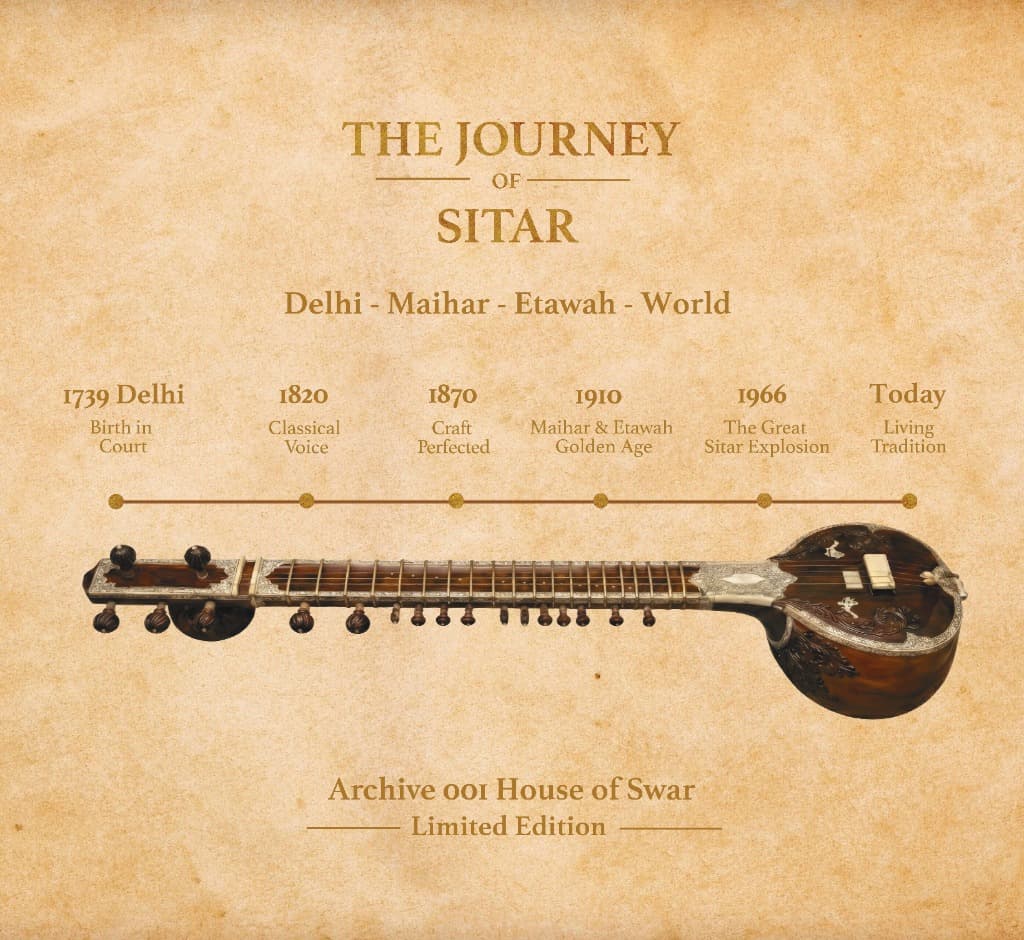
Persian strings. Mughal courts. North Indian soil. Three centuries of refinement. One instrument. One archival work documenting all of it.
The Founding Edition of House of Swar is limited to five acquisitions. It is a commitment to rarity and meaning.
Reservation confirms custodianship of one archival work.